

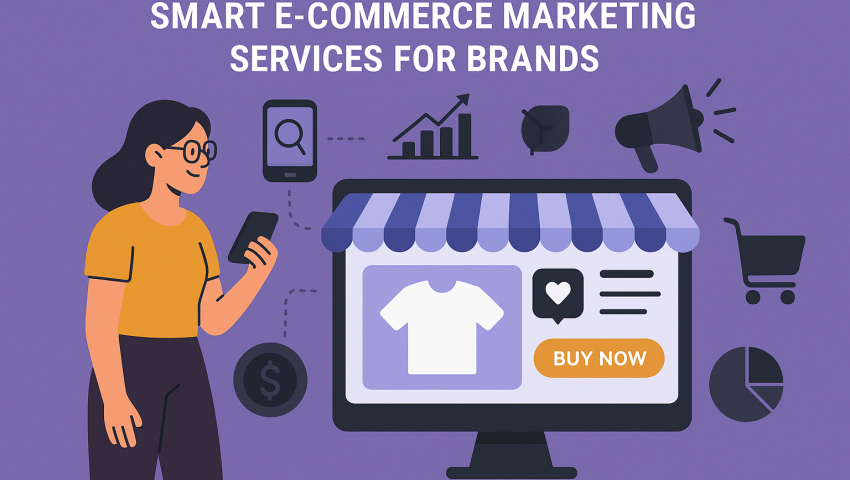
Smart E-commerce Marketing Services for Brands
-
 By Next Gate
 - Marketing
- May 31, 2025
- 11 minutes read
- 210 Views
Boost your brand’s online sales with Smart E-commerce Marketing Services for Brands—strategies, tools, and expert insights for success.
Introduction
In today’s hyper-competitive digital marketplace, brands must go beyond traditional marketing tactics to capture consumer attention and drive sales. The rise of e-commerce has transformed how businesses operate, making it essential to adopt Smart E-commerce Marketing Services for Brands—a blend of artificial intelligence, automation, data analytics, and omnichannel strategies designed to optimize online performance.
The modern consumer expects seamless, personalized shopping experiences. Whether browsing on a mobile device, engaging with social media ads, or making purchases via voice search, shoppers demand convenience and relevance. Brands that fail to meet these expectations risk losing customers to competitors who leverage Smart E-commerce Marketing Services for Brands to deliver hyper-targeted campaigns, predictive recommendations, and frictionless checkout experiences.
One of the biggest challenges in e-commerce is standing out in an oversaturated market. With millions of online stores vying for consumer attention, brands must rely on intelligent marketing solutions that automate repetitive tasks, analyze customer behavior, and optimize ad spend. Smart E-commerce Marketing Services for Brands enable businesses to scale efficiently, reduce wasted resources, and maximize return on investment (ROI).
Another critical factor is the shift toward data-driven decision-making. Unlike traditional marketing, which often relies on guesswork, Smart E-commerce Marketing Services for Brands use real-time analytics to refine strategies. AI-powered tools track user interactions, predict buying patterns, and dynamically adjust campaigns to improve conversion rates. This level of precision ensures that marketing budgets are spent effectively, targeting high-intent shoppers rather than broad, uninterested audiences.
Furthermore, the rise of social commerce, influencer partnerships, and conversational AI (such as chatbots) has reshaped how brands engage with customers. Consumers no longer follow a linear path to purchase—they interact with brands across multiple touchpoints before buying. Smart E-commerce Marketing Services for Brands integrate these channels into a cohesive strategy, ensuring consistent messaging and a seamless customer journey.
In this guide, we will explore the key components of Smart E-commerce Marketing Services for Brands, including AI-driven personalization, automated email and SMS campaigns, programmatic advertising, and voice search optimization. We’ll also examine real-world case studies, implementation strategies, and emerging trends that will shape the future of e-commerce. By the end, you’ll understand how to leverage these services to enhance customer experiences, boost sales, and stay ahead in the ever-evolving digital landscape.
What Are Smart E-commerce Marketing Services for Brands?
Smart E-commerce Marketing Services for Brands refer to advanced, technology-driven marketing solutions designed to optimize online sales. These services integrate artificial intelligence (AI), machine learning (ML), automation, and big data analytics to enhance customer experiences and improve conversion rates.
Key Features of Smart E-commerce Marketing Services
AI-Powered Personalization – Tailoring product recommendations based on user behavior.
Automated Campaigns – Using chatbots, email sequences, and retargeting ads.
Omnichannel Marketing – Seamless customer experiences across websites, social media, and mobile apps.
Predictive Analytics – Forecasting trends to optimize inventory and promotions.
Performance Tracking – Real-time data insights for continuous improvement.
Why Brands Need Smart E-commerce Marketing Services
1. Rising Competition in E-commerce
With millions of online stores, brands must adopt Smart E-commerce Marketing Services for Brands to differentiate themselves. AI-driven insights help businesses understand customer preferences and adjust strategies accordingly.
2. Increasing Customer Expectations
Modern shoppers demand personalized experiences. Smart marketing tools analyze browsing history, purchase patterns, and demographics to deliver hyper-relevant content.
3. Cost-Effective Advertising
Automated ad bidding, dynamic product ads, and AI-driven targeting reduce wasted ad spend, ensuring higher ROI.
4. Scalability & Efficiency
Automation allows brands to scale marketing efforts without proportional increases in manpower or costs.
Core Components of Smart E-commerce Marketing Services
1. AI & Machine Learning for Personalization
AI-powered recommendation engines (like those used by Amazon and Netflix) analyze user behavior to suggest products, increasing average order value (AOV).
How It Works:
Behavioral Tracking – Monitors clicks, cart additions, and past purchases.
Dynamic Content – Displays personalized banners, emails, and product listings.
2. Automated Email & SMS Marketing
Automated workflows nurture leads and recover abandoned carts.
Key Campaigns:
Welcome Series – Introduces new customers to the brand.
Abandoned Cart Reminders – Recovers lost sales.
Post-Purchase Follow-ups – Encourages reviews and repeat purchases.
3. Social Commerce & Influencer Marketing
Platforms like Instagram Shops and TikTok Shopping integrate directly with e-commerce stores, enabling seamless purchases.
Best Practices:
Micro-Influencer Collaborations – More authentic engagement.
Shoppable Posts – Direct links to product pages.
4. Chatbots & Conversational Commerce
AI chatbots provide instant customer support, recommend products, and process orders via messaging apps.
5. Programmatic Advertising
Automated ad buying ensures ads reach the right audience at the optimal time.
6. Voice Search Optimization
With the rise of smart speakers, optimizing for voice search improves discoverability.
How to Implement Smart E-commerce Marketing Services
Step 1: Define Your Goals
Increase conversions?
Improve customer retention?
Reduce cart abandonment?
Step 2: Choose the Right Tools
Email Automation: Klaviyo, Mailchimp
AI Recommendations: Barilliance, Dynamic Yield
Chatbots: ManyChat, Drift
Step 3: Integrate Omnichannel Strategies
Ensure consistency across:
Website
Social media
Marketplaces (Amazon, eBay)
Mobile apps
Step 4: Analyze & Optimize
Use Google Analytics, Hotjar, and CRM data to refine campaigns.
Case Studies: Success with Smart E-commerce Marketing Services
Case Study 1: Fashion Brand Boosts Sales by 35% with AI Recommendations
A mid-sized apparel brand implemented AI-driven product suggestions, leading to a 35% increase in conversions within three months.
Case Study 2: DTC Brand Reduces Cart Abandonment by 50%
By using automated SMS reminders, a health supplement brand recovered 50% of abandoned carts, significantly increasing revenue.
Challenges & Solutions in Smart E-commerce Marketing
Challenge 1: Data Privacy Concerns
Solution: Ensure GDPR & CCPA compliance with transparent data policies.
Challenge 2: High Initial Costs
Solution: Start with scalable tools like Shopify’s built-in automation.
Challenge 3: Keeping Up with Trends
Solution: Follow industry leaders and invest in continuous learning.
Future Trends in Smart E-commerce Marketing
Augmented Reality (AR) Shopping – Virtual try-ons for apparel and cosmetics.
Blockchain for Transparency – Secure transactions and authenticity verification.
Hyper-Personalization with AI – Even more tailored shopping experiences.
Conclusion: The Future of E-Commerce Belongs to Smart Marketing
The e-commerce industry is evolving at an unprecedented pace, and brands that fail to adapt risk falling behind. Smart E-commerce Marketing Services for Brands provide the tools needed to thrive in this dynamic environment, offering data-driven insights, automation, and personalized customer experiences that drive long-term success.As we’ve explored in this guide, the key advantages of Smart E-commerce Marketing Services for Brands include:
Enhanced Personalization – AI and machine learning analyze customer behavior to deliver tailored product recommendations, increasing engagement and conversion rates.
Efficiency Through Automation – Automated email sequences, chatbots, and dynamic ads reduce manual workload while improving campaign performance.
Omnichannel Integration – Consumers interact with brands across multiple platforms, and smart marketing ensures a seamless experience from social media to checkout.
Data-Backed Decision Making – Real-time analytics allow brands to refine strategies, optimize ad spend, and predict future trends with precision.
Looking ahead, emerging technologies like augmented reality (AR) shopping, blockchain-powered transparency, and hyper-personalized AI interactions will further revolutionize e-commerce. Brands that embrace Smart E-commerce Marketing Services for Brands today will be best positioned to capitalize on these advancements, staying ahead of competitors and meeting ever-changing consumer expectations.
The shift toward intelligent marketing is not just a trend—it’s a necessity. Consumers now expect brands to anticipate their needs, deliver instant support, and provide frictionless shopping experiences. By implementing Smart E-commerce Marketing Services for Brands, businesses can build stronger customer relationships, increase retention, and drive sustainable revenue growth.
In conclusion, the future of e-commerce belongs to those who leverage technology to create smarter, more efficient, and customer-centric marketing strategies. Whether you’re a startup or an established enterprise, investing in Smart E-commerce Marketing Services for Brands will ensure you remain competitive in an increasingly digital world. The time to act is now—don’t let your brand get left behind.
FAQs on Smart E-commerce Marketing Services for Brands
What is an ecommerce marketing agency?
An ecommerce marketing agency is a specialized firm that helps online businesses promote their products and services through digital channels. These agencies offer a range of services including search engine optimization (SEO), pay-per-click (PPC) advertising, social media marketing, email campaigns, and conversion rate optimization. Their primary goal is to drive targeted traffic to ecommerce stores, increase sales, and improve brand visibility by implementing data-driven strategies tailored to the client's business model and target audience.
These agencies work closely with brands to analyze market trends, consumer behavior, and competitor strategies to create customized marketing plans. They utilize tools like Google Analytics, AI-powered recommendation engines, and CRM systems to track performance and optimize campaigns in real-time. By leveraging their expertise in digital marketing, ecommerce agencies help businesses scale efficiently while maximizing return on investment (ROI) across various online platforms.
What are the four types of e-commerce activities?
The four main types of e-commerce activities are Business-to-Consumer (B2C), Business-to-Business (B2B), Consumer-to-Consumer (C2C), and Consumer-to-Business (C2B). B2C involves companies selling products or services directly to individual consumers through online stores, like Amazon or Walmart. B2B refers to transactions between businesses, such as manufacturers selling to wholesalers or SaaS companies providing software solutions to other enterprises.
C2C platforms enable individuals to buy and sell goods among themselves, with examples including eBay and Facebook Marketplace. C2B is a less common model where consumers offer products or services to businesses, such as freelance marketplaces like Upwork or stock photo websites where photographers sell their work to companies. Each type has unique operational, marketing, and logistical requirements that shape how transactions are conducted in the digital marketplace.
What is meant by ECOM services?
ECOM services, short for e-commerce services, encompass all the digital solutions and tools that facilitate online buying and selling. This includes website development, payment processing, inventory management, digital marketing, order fulfillment, and customer support systems. These services are designed to streamline the entire online shopping experience for both businesses and consumers, ensuring smooth transactions from product discovery to delivery.
Modern ECOM services also incorporate advanced technologies like AI chatbots for customer service, AR-powered virtual try-ons, and blockchain for secure payments. They may be offered by specialized ecommerce platforms (like Shopify or WooCommerce), third-party logistics providers, or full-service agencies that handle everything from store setup to post-purchase engagement. The ultimate aim of ECOM services is to help businesses operate efficiently while delivering exceptional user experiences that drive repeat purchases and brand loyalty.
What is the best ecommerce platform?
The "best" ecommerce platform depends on a business's specific needs, budget, and technical expertise. Shopify is widely regarded as the most user-friendly option, offering intuitive drag-and-drop tools, extensive app integrations, and reliable hosting—making it ideal for beginners and scaling brands alike. WooCommerce, a WordPress plugin, provides greater customization for those with web development skills, while BigCommerce suits larger enterprises with its robust built-in features and scalability.
For businesses prioritizing omnichannel sales, platforms like Magento (now Adobe Commerce) offer advanced B2B functionality, though they require significant technical resources. Emerging solutions like Wix ecommerce and Squarespace cater to creatives with strong design templates. When choosing, consider factors like transaction fees, SEO capabilities, mobile responsiveness, and integration with existing tools to find the platform that aligns with your operational goals and growth trajectory.
What is customer service in simple words?
Customer service refers to the assistance and support provided to shoppers before, during, and after a purchase to ensure satisfaction. In simple terms, it's how a business helps customers with questions, problems, or requests—whether through phone calls, live chat, email, or self-service options like FAQs. Good customer service resolves issues quickly, maintains polite communication, and often turns one-time buyers into loyal patrons.
In ecommerce, this includes tracking order updates, handling returns, troubleshooting technical issues, and personalizing recommendations. Effective service builds trust; for example, Zappos became famous for its 365-day return policy and empathetic support. With tools like AI chatbots (for instant responses) and CRM systems (to track interactions), businesses can scale service while keeping it human-centric—a critical differentiator in today's competitive online marketplace.
What are the technology used in e-commerce?
E-commerce relies on diverse technologies to function seamlessly. Front-end technologies like HTML5, CSS, and JavaScript create user-friendly interfaces, while back-end systems (PHP, Python, Node.js) handle databases, payments, and security. Platforms often use CMS tools (WordPress, Shopify) for content management and CRM software (Salesforce, HubSpot) to manage customer relationships and data analytics.
Emerging technologies are transforming the sector: AI and machine learning power personalized recommendations (like Amazon's "Frequently Bought Together"), while AR lets customers visualize products (IKEA's furniture app). Blockchain ensures secure transactions, and IoT devices enable smart inventory tracking. Payment gateways (Stripe, PayPal), cybersecurity protocols (SSL encryption), and cloud computing (AWS hosting) form the backbone of secure, scalable ecommerce operations that cater to modern consumer expectations.
Next Gate
Leave a comment
Your email address will not be published. Required fields are marked *