

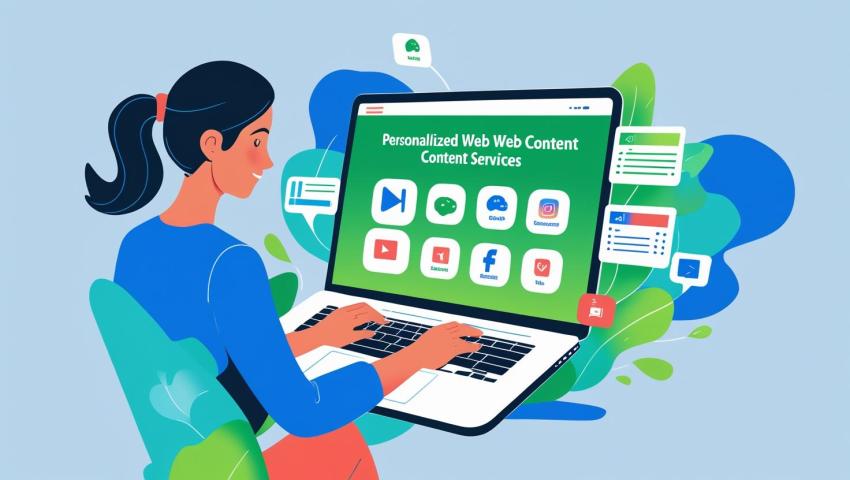
Personalized Web Content Services Your Brand Needs
-
 By Next Gate
 - Marketing
- Jun 05, 2025
- 8 minutes read
- 262 Views
"Discover Personalized Web Content Services Your Brand Needs to boost engagement, conversions, and loyalty. Learn key strategies & future trends.
In today’s fast-paced digital world, consumers are bombarded with an overwhelming amount of content every day. From social media ads to email campaigns, the competition for attention is fiercer than ever. The key to cutting through the noise? Personalized Web Content Services Your Brand Needs.
Generic, one-size-fits-all content no longer suffices. Modern consumers expect brands to understand their preferences, anticipate their needs, and deliver tailored experiences. Whether it’s a product recommendation based on past purchases, a localized landing page, or a dynamic email that addresses the recipient by name, personalization has become a non-negotiable element of successful digital marketing.
Studies show that 80% of consumers are more likely to engage with a brand that offers personalized experiences (Epsilon). Furthermore, businesses leveraging personalization report higher conversion rates, increased customer loyalty, and improved ROI. The reason is simple: when content resonates with the audience, they feel valued, leading to stronger brand connections and long-term engagement.
However, implementing Personalized Web Content Services Your Brand Needs goes beyond just inserting a customer’s name in an email. It requires a strategic approach, combining data analytics, AI-driven insights, and dynamic content delivery. Brands must collect and analyze user behavior, segment audiences effectively, and deploy real-time personalization tools to stay ahead.
This comprehensive guide will explore:
The fundamental components of personalized web content
Best practices for implementation
The latest trends shaping the future of personalization
Real-world benefits and challenges
By the end, you’ll understand why Personalized Web Content Services Your Brand Needs are critical for staying competitive and how to integrate them seamlessly into your digital strategy.
What Are Personalized Web Content Services?
Definition and Importance
Personalized Web Content Services Your Brand Needs involve creating and delivering customized digital experiences based on user data, such as browsing history, demographics, and past interactions. Unlike one-size-fits-all content, personalization ensures that each visitor receives relevant, engaging material tailored to their interests.
Why Personalization Matters
Higher Engagement: Customized content captures attention and keeps users on your site longer.
Improved Conversions: Personalized CTAs and product recommendations drive sales.
Enhanced Customer Loyalty: Users feel valued when content aligns with their needs.
Better SEO Performance: Search engines favor websites that provide a superior user experience.
Key Components of Personalized Web Content Services
1. User Data Collection & Analysis
To deliver Personalized Web Content Services Your Brand Needs, businesses must gather and analyze user data through:
Cookies & Tracking Tools (Google Analytics, Hotjar)
CRM Systems (HubSpot, Salesforce)
Behavioral Analytics (heatmaps, session recordings)
2. Dynamic Content Delivery
Websites can display different content based on:
Location (localized offers)
Device Type (mobile-optimized layouts)
Past Purchases (recommendation engines)
3. AI & Machine Learning
AI-powered tools like chatbots and predictive analytics help automate personalization by:
Predicting user preferences
Offering real-time suggestions
Adjusting content dynamically
4. Segmentation & Targeting
Divide your audience into segments (e.g., new visitors, returning customers) and tailor content accordingly.
How to Implement Personalized Web Content Services
Step 1: Define Your Personalization Goals
Increase sign-ups?
Boost sales?
Improve retention?
Step 2: Choose the Right Tools
Popular platforms for Personalized Web Content Services Your Brand Needs include:
Optimizely (A/B testing)
Dynamic Yield (AI-driven personalization)
Evergage (real-time customization)
Step 3: Test & Optimize
Run A/B tests to determine the most effective content variations.
Use heatmaps to analyze user interactions.
Continuously refine based on performance metrics.
Benefits of Personalized Web Content Services
1. Increased Conversion Rates
Personalized CTAs and product recommendations can improve conversions by up to 202% (HubSpot).
2. Enhanced User Experience
Visitors spend more time on websites that cater to their interests.
3. Stronger Brand Loyalty
Customers are more likely to return to brands that understand their preferences.
4. Competitive Advantage
Businesses using personalization outperform competitors by delivering relevant content faster.
Challenges & Solutions in Personalization
1. Data Privacy Concerns
Solution: Ensure GDPR & CCPA compliance with transparent data policies.
2. High Implementation Costs
Solution: Start with basic personalization (e.g., email segmentation) before scaling.
3. Maintaining Consistency
Solution: Use automation tools to ensure uniformity across channels.
Future Trends in Personalized Web Content
1. Hyper-Personalization with AI
AI will enable real-time content adjustments based on micro-interactions.
2. Voice Search Optimization
Voice assistants will require context-aware content for better responses.
3. Augmented Reality (AR) Personalization
Brands will use AR to offer customized virtual shopping experiences.
Conclusion
As we’ve explored throughout this guide, Personalized Web Content Services Your Brand Needs are not just a trend—they are the future of digital engagement. In an era where consumers demand relevance and immediacy, brands that fail to personalize risk losing audience interest, conversions, and market share.
The benefits of personalization are undeniable:
Higher Engagement: Tailored content captures attention and keeps users invested in your brand.
Increased Conversions: Personalized CTAs, product suggestions, and dynamic pricing strategies drive sales.
Stronger Customer Relationships: When users feel understood, they develop trust and loyalty.
Competitive Edge: Brands that master personalization outperform competitors by delivering superior user experiences.
However, successful personalization requires more than just technology—it demands a customer-centric mindset. Businesses must prioritize data privacy, invest in the right tools (like AI and machine learning), and continuously test and optimize their strategies. The future of Personalized Web Content Services Your Brand Needs will see even deeper advancements, including hyper-personalization through AI, voice search optimization, and augmented reality integrations.
The question is no longer whether your brand should adopt personalization, but how quickly you can implement it. The brands that thrive in the coming years will be those that leverage data intelligently, anticipate customer needs, and deliver seamless, individualized experiences at every touchpoint.
By embracing Personalized Web Content Services Your Brand Needs, you position your business for sustained growth, customer satisfaction, and digital dominance. Start today—your audience is waiting for content that speaks directly to them.
FAQs on Personalized Web Content Services Your Brand Needs
What is personalized content in marketing?
Personalized content in marketing refers to creating and delivering tailored digital experiences to individual users based on their preferences, behaviors, and demographics. This includes customized emails, product recommendations, dynamic website content, and targeted ads that align with a user's past interactions. For example, Netflix suggests shows based on viewing history, while Amazon displays products similar to previous purchases. The goal is to increase engagement, improve conversion rates, and enhance customer satisfaction by making content more relevant to each user.
Businesses achieve personalization through data collection (like browsing history and purchase patterns) and automation tools (such as AI-driven recommendation engines). When done right, personalized content fosters stronger customer relationships and boosts brand loyalty. Studies show that 80% of consumers are more likely to engage with brands that offer personalized experiences, making it a crucial strategy in modern digital marketing.
What is personalized branding?
Personalized branding goes beyond customized content—it involves shaping the entire customer experience to feel unique and tailored to each individual. This includes personalized messaging (like emails with the recipient's name), customized product offerings (such as Nike's custom sneakers), and dynamic digital experiences (like Spotify's personalized playlists). The key difference between personalized content and branding is that branding encompasses the full customer journey, creating emotional connections rather than just targeted promotions.
Successful personalized branding makes customers feel valued and understood, leading to higher retention and advocacy. Brands like Starbucks (with personalized rewards) and Coca-Cola (with its "Share a Coke" campaign) have excelled in this space by making their interactions feel one-of-a-kind. The result? Increased customer loyalty, stronger brand affinity, and a competitive edge in crowded markets.
What are the four D's of personalization?
The four D's of personalization provide a structured approach to implementing effective personalization strategies. The first is Data, which involves collecting user information through CRM systems, cookies, and behavioral analytics. The second is Divide, where businesses segment audiences based on demographics, behavior, or preferences. The third is Decide, where marketers determine which content to personalize for each segment. Finally, Deliver ensures the right content reaches the right user at the right time through automation and AI-driven tools.
This framework helps brands create a seamless personalization process, from gathering insights to executing targeted campaigns. For example, an e-commerce site might use browsing history (Data) to segment users into "frequent buyers" and "first-time visitors" (Divide), then send exclusive discounts to loyal customers (Decide) via email automation (Deliver). Following these steps ensures personalization is strategic, scalable, and impactful.
What are the 5 key features of personalization?
Effective personalization relies on five key features: Relevance (content must align with user interests), Real-Time Adjustments (dynamic updates like cart abandonment emails), Consistency (unified experiences across all channels), Scalability (automation for large audiences), and Privacy Compliance (adhering to GDPR/CCPA regulations). Without these elements, personalization efforts may fall flat or even harm customer trust.
Brands like Spotify and Amazon excel in personalization by using AI to analyze user behavior and deliver hyper-relevant content instantly. Meanwhile, privacy-conscious companies ensure data is used ethically, balancing customization with consumer protection. These five features work together to create personalization that feels natural, valuable, and sustainable for long-term customer relationships.
What is personal branding content?
Personal branding content is material created to establish an individual's or influencer's unique identity and expertise online. This includes blog posts, social media updates, videos, podcasts, newsletters, and webinars that showcase their knowledge and personality. Examples include Gary Vaynerchuk's motivational business talks or Marie Forleo's self-improvement content—both use personal branding to build authority and connect with their audiences.
This type of content helps professionals stand out in competitive fields, attract career opportunities, and foster trust with their followers. Unlike corporate branding, personal branding focuses on the individual's voice, values, and niche expertise. When done consistently, it can lead to speaking engagements, partnerships, and a loyal community that engages with their content regularly.
Next Gate
Leave a comment
Your email address will not be published. Required fields are marked *